


If you’re the parent or guardian of a new Australian Defence Force (ADF) member, congratulations and welcome to the Defence community!
As your loved one embarks on their journey with the ADF, you’re likely experiencing a mixture of pride, concern, and perhaps uncertainty about what lies ahead. This significant life transition affects not only the new member but the entire family unit.
At Defence Families of Australia (DFA), we understand that your support plays a crucial role in your loved one’s professional success—and by extension, in Australia’s defence capability.
The strength that uplifts

Image: A junior officer greeted her friends and family following the course 04/24 Initial Officer Course graduation parade at RAAF Base East Sale, Victoria.
\ Department of Defence
Military service demands exceptional commitment, resilience, and adaptability.
We know from experience that behind every successful ADF member is often a network of supportive family members who provide the emotional foundation that enables them to focus on their demanding roles.
In other words, your support and love uplifts them, empowering them to become the best version of themselves.
Research consistently shows that ADF members with strong family support demonstrate greater operational readiness and resilience, improved mental wellbeing, and higher retention rates.
This isn’t a coincidence or fluke — while immeasurable and intangible, your encouragement creates a stable platform from which your new member can confidently serve.
Familiarising yourself with your new role

Image: A number of Australian families have a proud legacy of service through both the ADF and Australian Public Service. \ Department of Defence
As the parent or guardian of a new ADF member, you’re now part of the broader Defence community.
While your loved one will be learning new skills and adapting to military life, you too will be navigating unfamiliar territory, including learning a whole new language (or at least what feels like one – Defence acronyms and jargon take some getting used to, which is why our page on Defence acronyms can be helpful).
This parallel journey creates a unique opportunity for you all to strengthen your relationship while supporting national defence priorities. Your positive attitude toward their service directly influences how they approach challenges.
When you demonstrate understanding of their commitment, celebrate their achievements, and show interest in their experiences, you’re contributing to building their confidence and professional development.
We know you will have many questions. Defence has prepared a series of answers to some questions you may have about your loved one’s wellbeing and training, as well as helpful contact details if you need additional information.
Practical ways to support your new member
During training
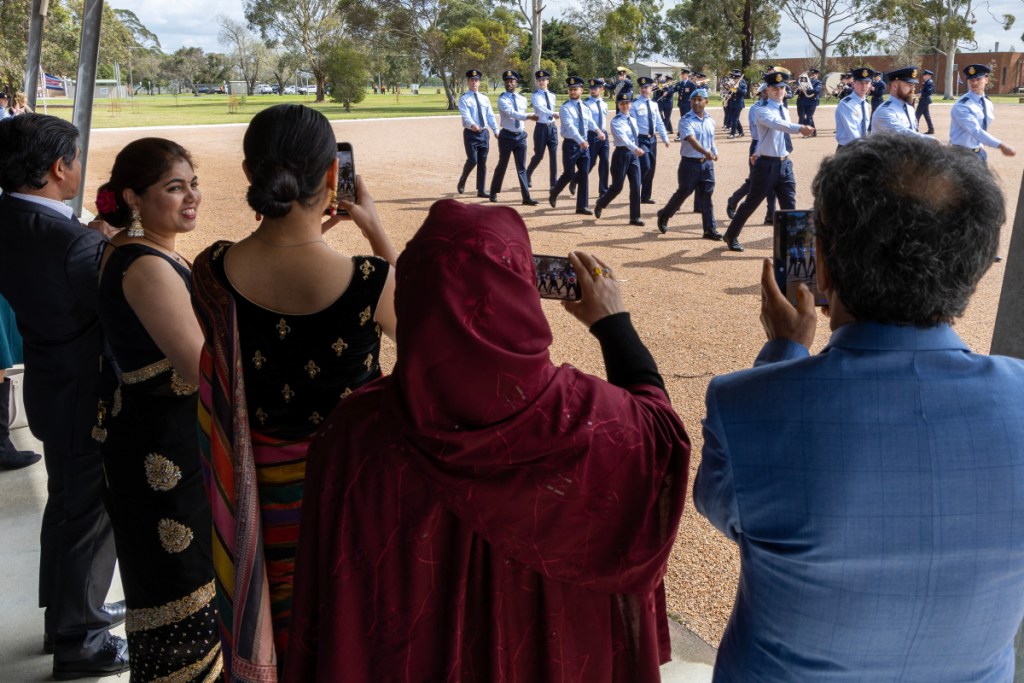
Image: Friends and family at the Initial Officer Course 05/24 graduation parade, at Officer Training School, RAAF Base East Sale, Victoria. \ Department of Defence
Initial training represents perhaps the most significant adjustment period for a new member and their family. Your loved one may experience limited communication opportunities, physical demands, and the psychological challenge of adapting to military discipline. During this time:
- Send encouraging letters or care packages when permitted. These can help maintain a connection to home, family, and friends.
- Be understanding about limited communication opportunities and missed family events. You will miss them and they will miss you, but your empathy and understanding will help them fulfil their obligations knowing they have your full support.
- Learn about their training progression to ask informed questions.
- Acknowledge their accomplishments, however small they might seem. They work extremely hard, and the little wins are incredibly meaningful!
- If possible, attend their graduation ceremony, which is usually held on a Defence base. Seeing loved ones at graduation will make all the sacrifice and effort worthwhile for you both. (Note: it can be tricky to lock in dates until closer to the event, so be prepared to be flexible with leave and travel arrangements.)
After posting
Once your family member is posted to their unit, which can be interstate, you can continue to show your support through:
- Maintaining regular contact while respecting operational security requirements
- Creating flexible family traditions that can adapt to their availability
- Connecting with other Defence families to share experiences and support
- Familiarising yourself with available support services. The Defence Member and Family Information Guide, published by the Defence Member and Family Support branch, is a valuable resource.
The Capability Connection
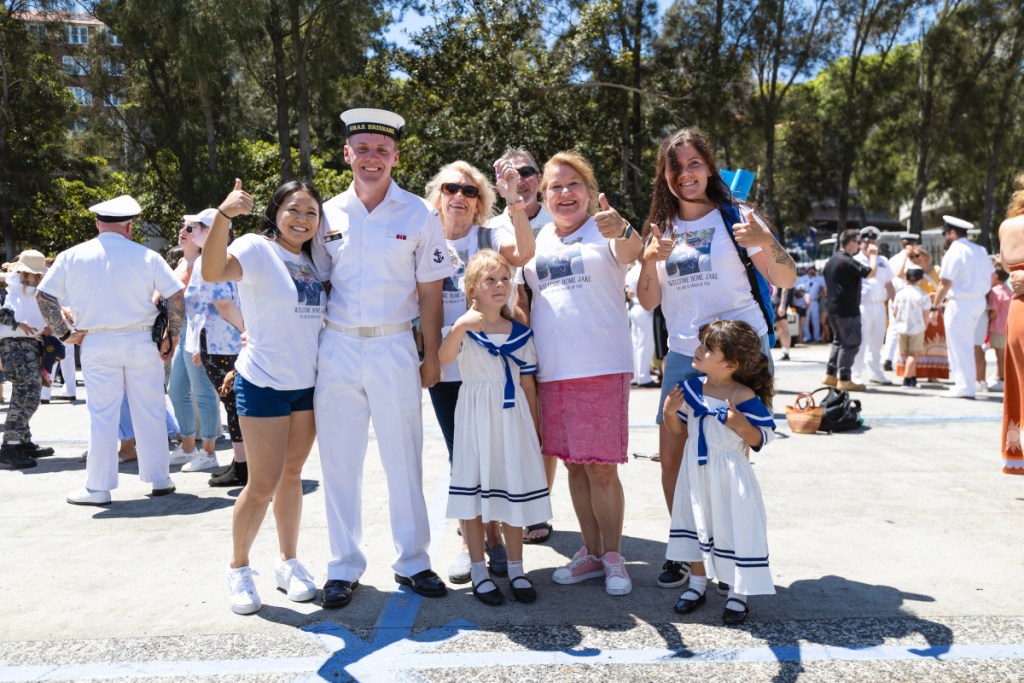
Image: A member of HMAS Brisbane’s ship’s company with family and friends after the ship returned to its home port following a successful deployment.
\ Department of Defence
You might wonder how your family support translates to enhanced Defence capability. The connection is more direct than you might think:
When ADF members feel supported at home, they can fully focus on their operational responsibilities without the distraction of family concerns.
If your loved one has children of their own, whom you may be caring for, having this additional support will also help them feel reassured.
This mental clarity is essential for decision-making, skill execution, and team cohesion—all critical elements of effective Defence operations.
Down the line, your family support also contributes to retention of experienced personnel. Each time a trained service member leaves the ADF prematurely, valuable expertise is lost and significant recruitment and training resources are required to replace them. Your support helps maintain continuity of capability within units.
Building your own support network
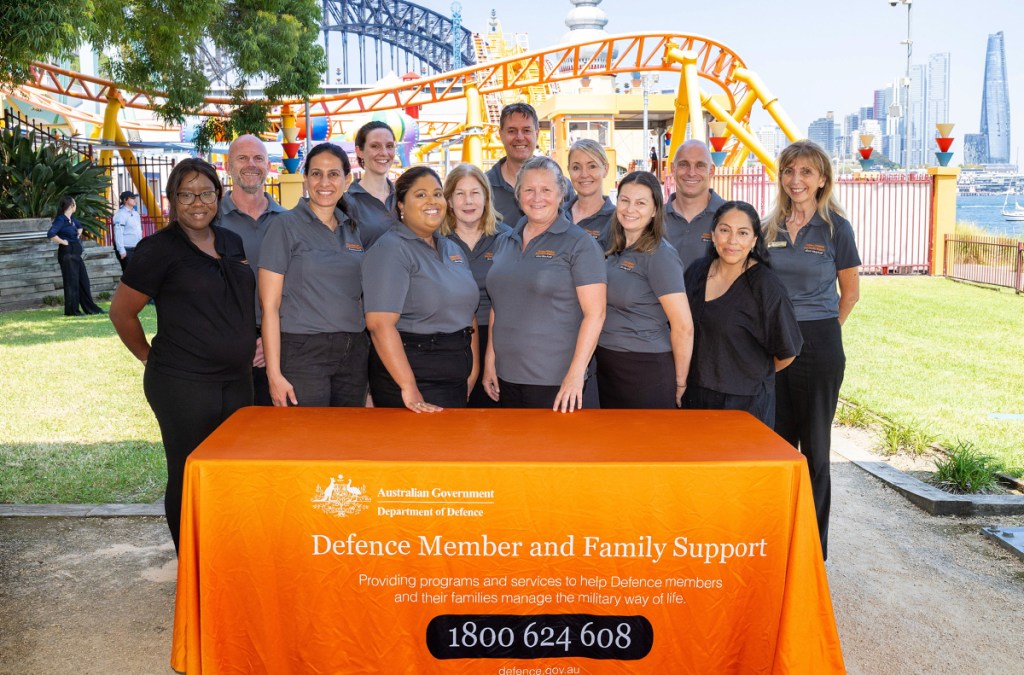
Image: Defence Members and Family Support staff at a Welcome Event held at Luna Park, Sydney. \ Department of Defence
Supporting your recruit is not a burden you should carry alone. There are a range of support organisations exist to help you navigate this journey. Consider:
- Attending family information sessions offered by Defence
- Connecting with local Defence community groups or attending Defence Member and Family Support (DMFS) events in your area
- Engaging with online communities of Defence parents, through Defence-approved platforms such as ForceNet (Note: You will need to ask your ADF member to sponsor you as a family member)
- Utilising other supports, including general financial advice through the ADF Financial Services Consumer Centre, mental health and wellbeing support through Open Arms, and your local Ex-Service Organisations including RSL or Legacy Australia.
Embracing the journey
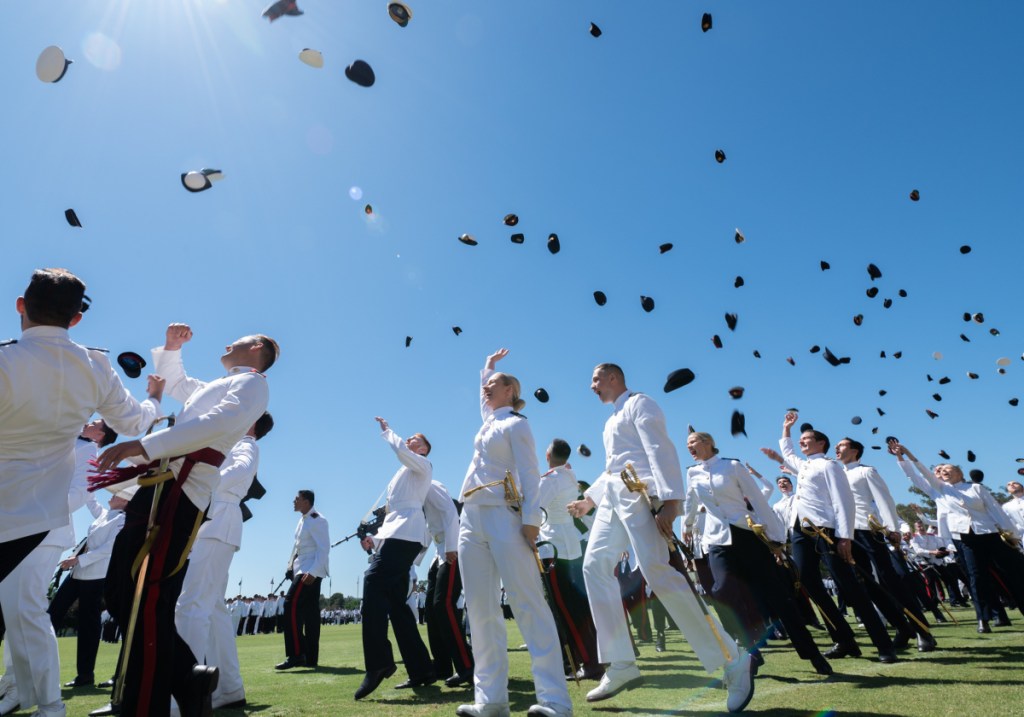
Image: The Australian Defence Force Academy (ADFA) 2024 Graduation Parade celebrated 83 Navy Midshipmen, 92 Army Officer Cadets and 114 Air Force Officer Cadets as they completed their academic studies and military training and began their career in the ADF. \ Department of Defence
As your loved one develops into a skilled Defence member, your relationship will evolve. By maintaining open communication, demonstrating flexibility, and showing genuine interest in their service, you can help foster a supportive environment that benefits both your family relationship and our national security.
Remember that your role as a supportive family member represents one of Australia’s greatest strategic advantages. The strength and resilience you provide at home directly translates to capability in the field.
At DFA, we recognise the significant contribution you make as the parent or guardian of an ADF member.
Your support matters not just to your recruit, but to Australia’s defence capability as a whole. Together, we form the backbone of support that enables our Defence Force to protect our nation and its interests.
Thank you for your support of your loved one in uniform.